Hydration is a variable, not a quality measure. What 65, 70, and 80 percent dough hydration really mean and when each level makes sense.
Spend enough time in bread forums and you'll notice: hydration is the number bakers brag about. "80 percent hydration, open crumb, big bubbles." And Instagram crumb shots have been pushing in the same direction for years. High hydration, large holes, glossy crumb.
The problem: hydration is a variable, not a quality measure. A bread at 65 percent hydration can be better than one at 85. It depends on what you're baking, what flour you're using, what equipment you have, and what you're baking it for.
This article is for people who have at least 10 to 20 loaves under their belt, who maintain their sourdough starter, and who have already experimented with higher hydration, and noticed that it doesn't automatically get "better." We'll look at what hydration actually does and when each setting makes sense.
Hydration is the ratio of water to flour, measured by weight.
500 g of flour plus 350 g of water gives 70 percent hydration.
That's the whole formula. It says nothing about how the dough feels, how it handles, or how the bread tastes in the end. It's a ratio, nothing more.
What hydration does influence, though:
- How much water stays in the crumb, which affects moistness and shelf life
- How the gluten network behaves, because softer dough requires a different technique
- How large the pores can get, since more water means more space for CO2
- How quickly the dough ferments, because wetter dough warms up differently
What hydration does not automatically do: make a better bread. The claim that "higher hydration equals better bread" is the kind of half-truth that travels well in Instagram echo chambers but fails in the kitchen.
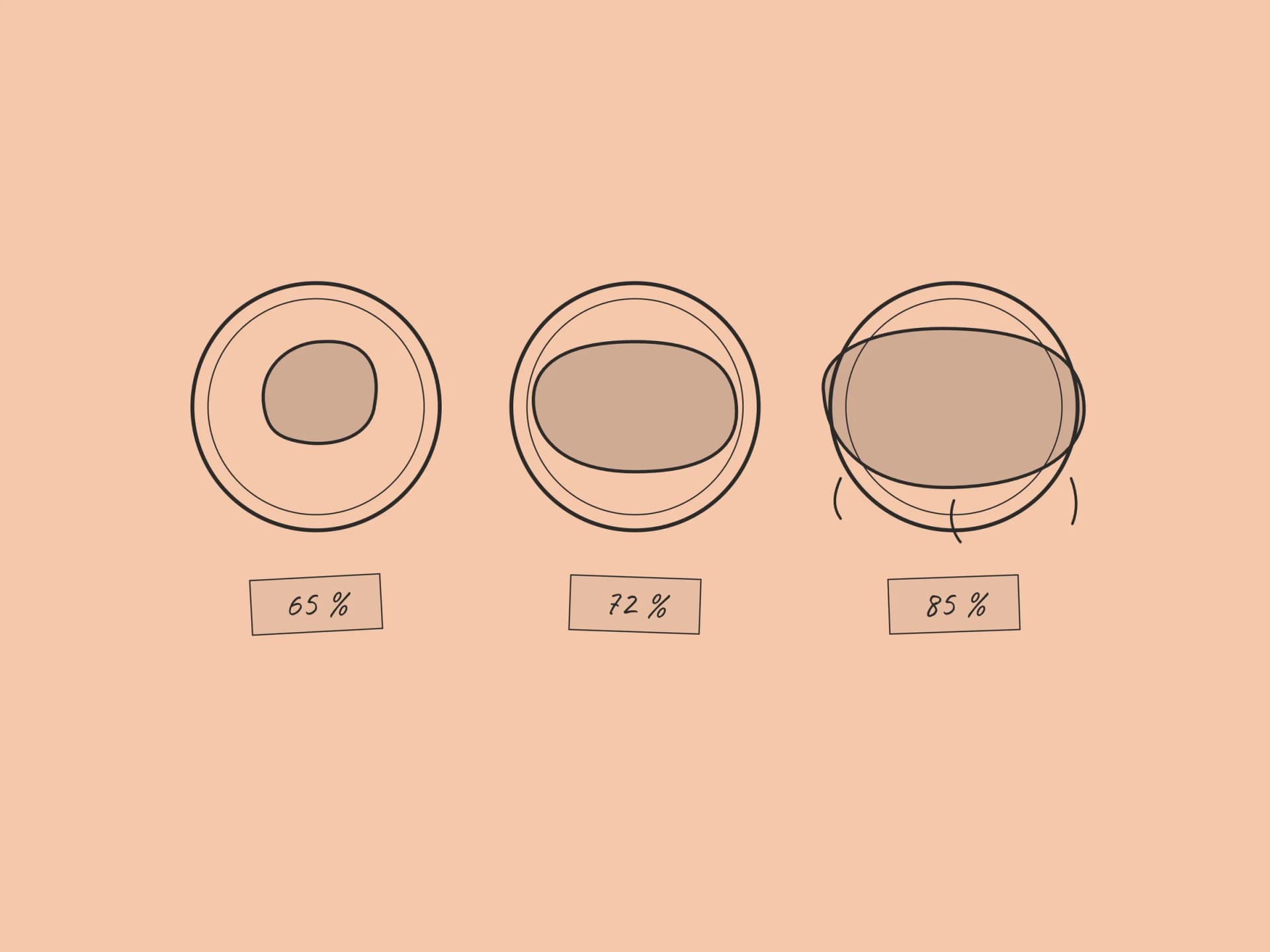
A 65 percent dough is firm. You can knead it by hand, it holds its shape, it sits on the work surface instead of spreading out. Classic German mixed-grain breads often land between 60 and 68 percent.
What you get:
- A tighter crumb with smaller, more uniform pores
- Better sliceability (the bread doesn't crumble)
- Longer shelf life (less residual moisture, slower mold growth, counterintuitive but true)
- Clean shape, crisp crust
Good for: Sandwich breads that need to be sliced. Snack breads that sit on a plate. Rye and rye-blend breads (rye has lower water absorption capacity anyway). Beginners who want to learn shaping.
Not ideal for: If you want a very open, alveolate crumb (ciabatta-style). Wheat breads meant to look like the French kind.
An 80 percent dough flows. It has no shape of its own, it needs to be guided into bowls or proofing baskets, it sticks to everything. Handling happens primarily through stretch and fold, not classic kneading.
What you get:
- Larger, irregular pores in the crumb
- A glossy, "wet" crumb
- A crunchier crust (more water, more steam, more caramelization)
- A moister bread in the first 24 hours
Good for: Ciabatta, Pane Pugliese, classic French-style wheat breads. Breads eaten the same day or the day after. Experienced bakers comfortable with stretch-and-fold rhythms.
Not ideal for: If you want the bread to last several days (gets soggy). Beginners without a feel for gluten development (dough turns to soup). Flours with low protein content (no structure possible).
Here's the thing that most guides skip over: flour is not flour, and its water absorption varies enormously.
German wheat flour type 550 typically absorbs 60 to 65 percent water before the dough gets too sticky. Italian Tipo 00 with higher protein content can handle 70 to 75 percent easily. French T65 sits somewhere in between. And whole grain flours absorb water like sponges, so 80 percent hydration with whole grain feels like 65 with type 550.
Which means: if an American recipe says "78 percent hydration" and you follow it exactly with German 550 flour, you'll end up with a much wetter dough than the recipe author had. Your bread won't look like the photo, and that's not your fault.
Practical tip: think of hydration numbers the way you'd think of temperature readings from another country. They translate, but not one-to-one.
If you're currently bouncing between 65 and 85 and don't know where to land:
Stick to one hydration. At least 5 loaves in a row. Only once you know how your flour, your water, your kitchen, and your oven respond at, say, 72 percent does it make sense to change a variable. Otherwise you're changing everything at once and learning nothing.
Write down what you did. This sounds obvious, but we've both been in the situation of not being able to remember, four weeks later, whether the good loaf was at 72 or 75 percent. One short note per bake saves you months of learning time.
Trust the dough, not the number. If your 70 percent dough feels right, that's good. If someone on Instagram looks better at 85, that doesn't mean your 70 is worse. It means they've found different settings that work for them. That's a signal, not an instruction.
We're not claiming that 80 percent is bad. We're not claiming that 65 is better. We're claiming that the question "which hydration?" is the wrong question. The right question is: "What do I want to eat in the end, and which variable gets me there?"
Hydration is one of them. Not the only one, not the most important.
This article is part of our bread series at bakeqee. We're building a notebook and tracking tool where you can log your own bakes with all the parameters, so you don't have to guess what was different last time.