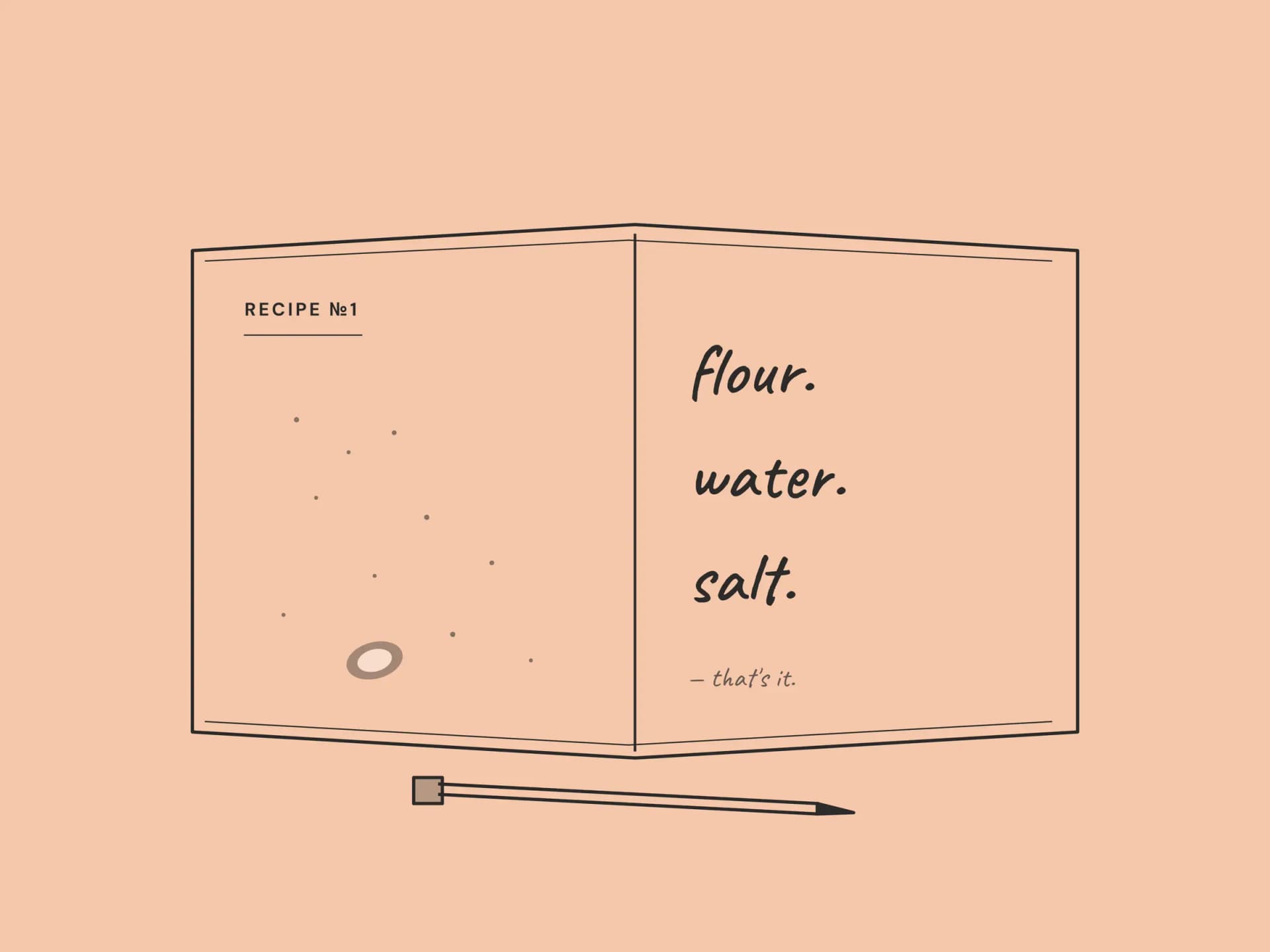
My sourdough starter was dead for three weeks. Then it rose on its own. What that taught me about patience, guides, and the real pace of sourdough.
I'd set up a sourdough starter. Whole-grain rye flour, filtered water, a jar on the radiator. The usual beginner program. Four days later, nothing had happened.
Nothing. No bubbles. No smell. A greyish-brown sludge staring at me out of the jar like a wet dog that had lost its appetite for life.
I did what you do when you're desperate: I kept reading. Mann-backt.de, bine-backt, Plötzblog, three Reddit threads, a YouTube video by a Dutch woman with an extremely calm voice.
Everyone said something different. Whole-grain rye instead of type 1150. More water. Less water. Kickstart it with pineapple juice. Store it at 28 degrees. Store it in the oven (light on, that's enough). "Leave the starter alone," which for some reason I read as psychological advice.
I did none of it. I gave up and walked past it for a week. The jar sat on the radiator. I'd glance at it sometimes and no longer thought "why isn't this working," but "when do I finally throw this out."
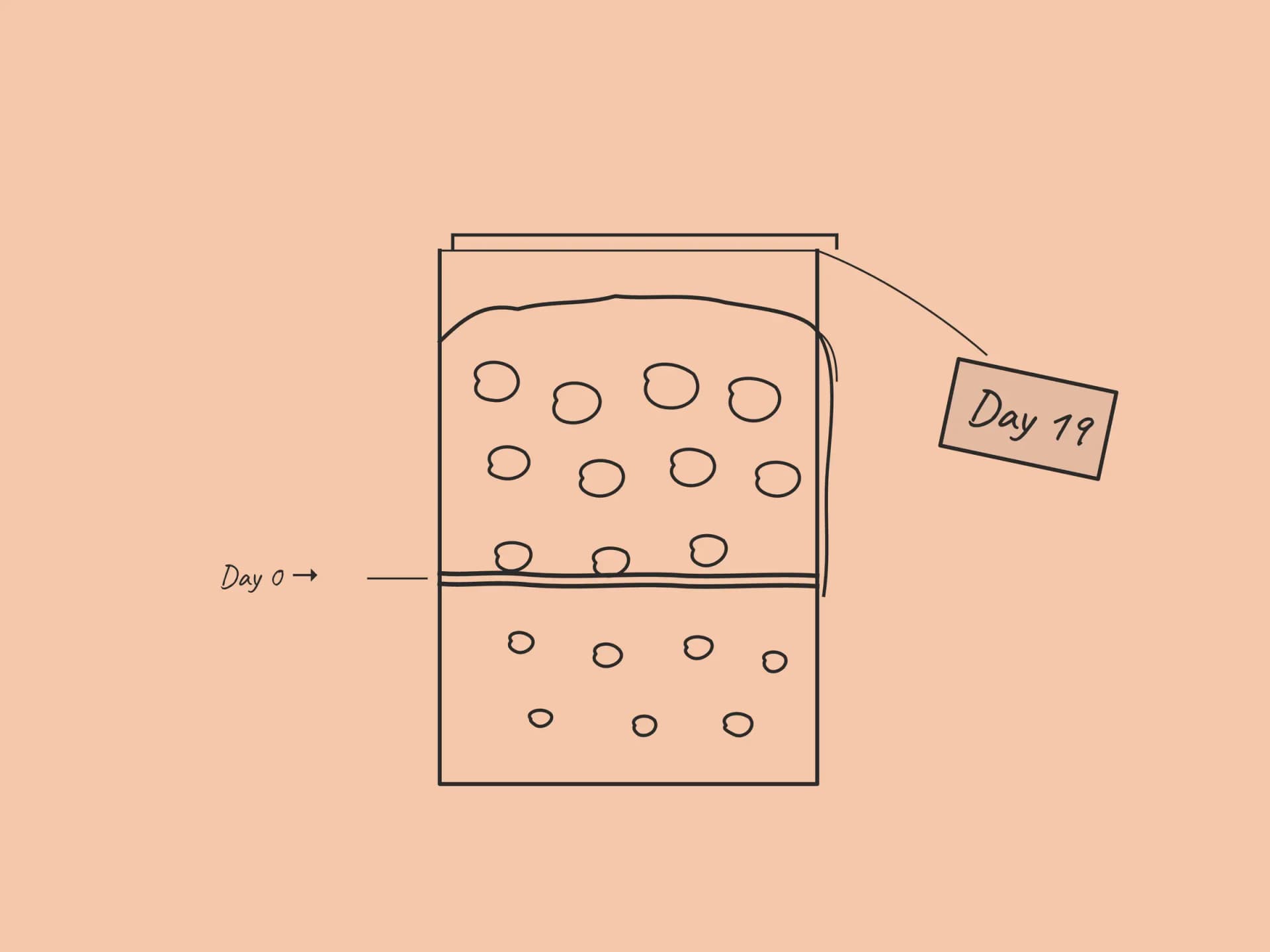
On day 19 (I remember, because I later noted it on a slip of paper that's now in the kitchen drawer) I happened to glance over and the starter had doubled. Just like that. Overnight. Bubbles, a clean smell, the whole program.
I didn't understand what had happened. I hadn't fed it for three weeks. I'd factually ignored it. If I'd gone up to it that day and said "you are now the liveliest sourdough in the world," it would have had just as much logic as everything I'd done before.
Three things. And all three are either not mentioned in most beginner guides or buried under so many other tips that you don't recognize them.
1. Sourdough doesn't run linearly
This is in many guides, but mostly as a side note. It should be at the top, in bold: On some days nothing happens, and on others everything suddenly happens at once. If you don't see bubbles on day 4, that doesn't mean the starter is dead. It means the first microorganisms (the "wrong" ones, which are fast but don't stay) have finished their phase and the right ones haven't taken over yet. This in-between phase feels like a standstill. But it's a transition.
2. Patience isn't a character trait, it's a technique
I'd previously imagined I was "patient." I'm not. What worked wasn't patience, it was resignation. I'd given up on the starter, and as a result (paradoxically) stopped intervening. When you feel the urge to "do something" with your starter, meaning stir it, move it somewhere else, feed it more often, that's often the moment you disturb it. Less really is more.
3. The guide on the internet isn't the truth, it's one experience
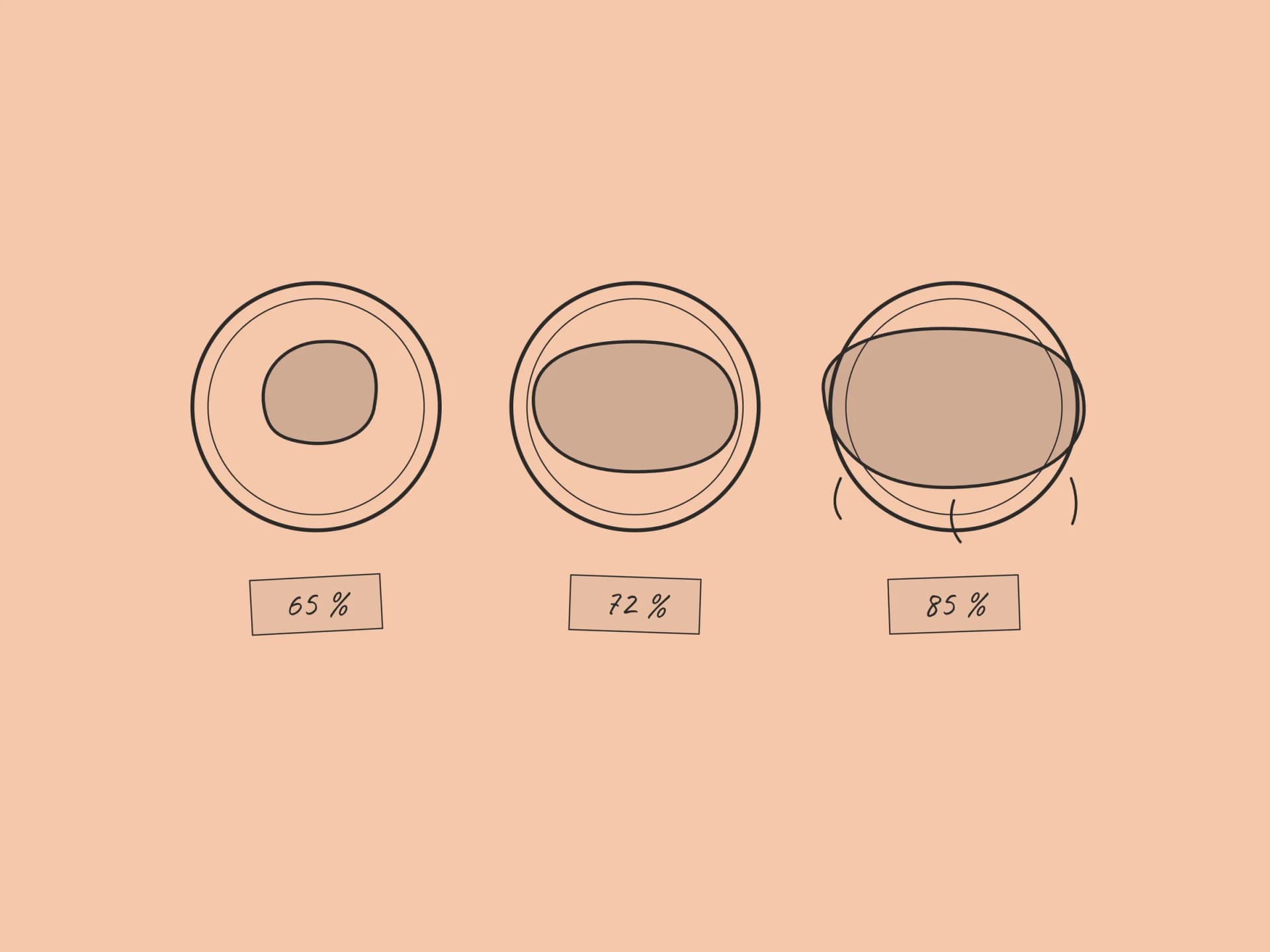
And my experience was a different one. What happens in 5 days for Lutz took 19 for me. What bubbles on day 3 for a blogger with a heated apartment in Munich can still look dead on day 7 for me in an old building in Bochum. No one tells you that in the guide. But that's the reason so many beginners think they've messed it up.
Because I wish someone had told me this beforehand in a single paragraph. Instead of a 4,000-word guide where, somewhere between hydration levels and bread types, there's the note "sometimes it takes longer."
Sourdough isn't broken just because it doesn't work on your schedule. It works on its own.
I'm currently building bakeqee with Maik, a notebook and progress tracker for bread and pizza people. If I'd written down the thing with the starter, I'd have known after three weeks that it was normal. Instead, I had to learn it the hard way.